


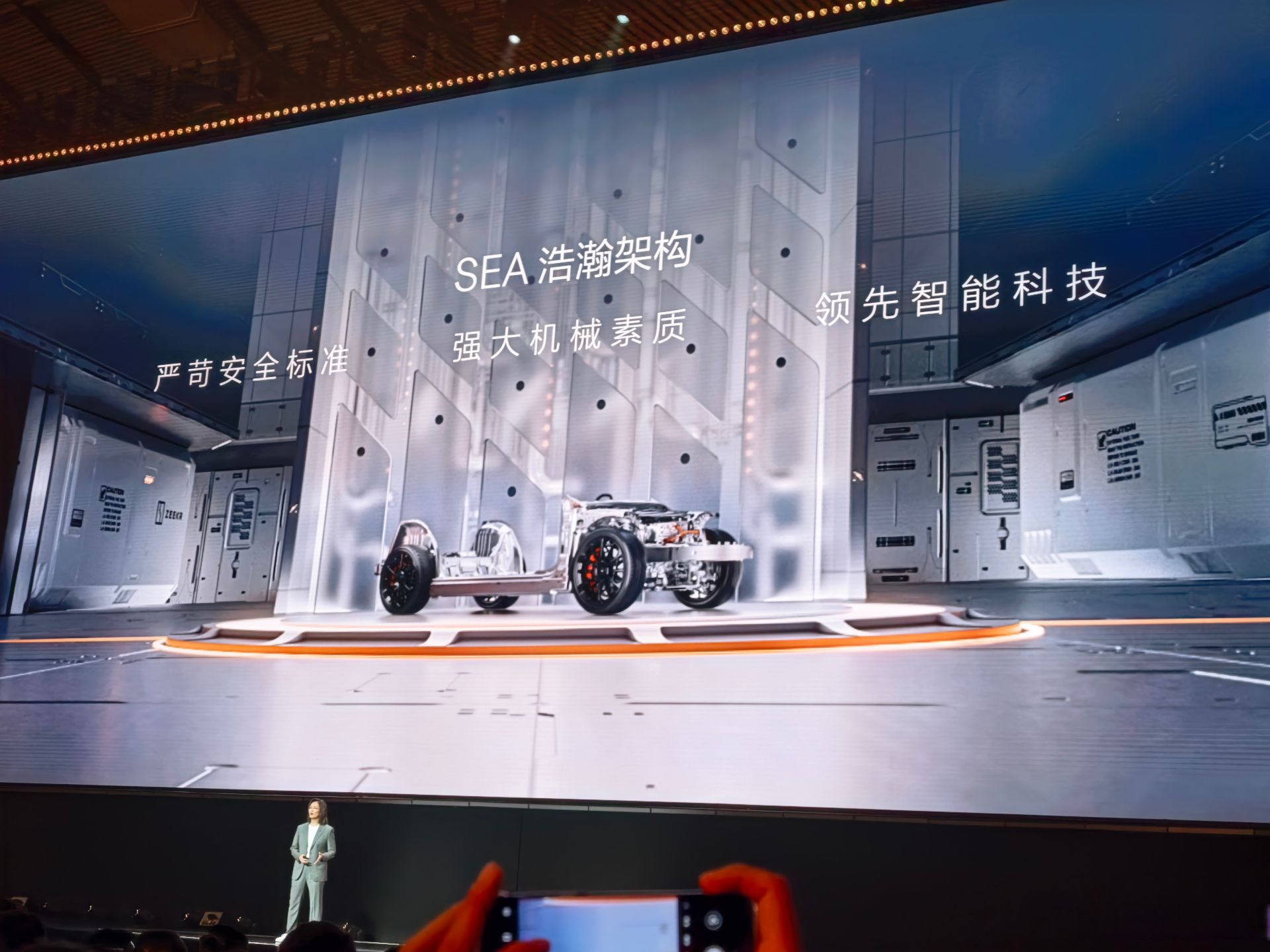
Geely's NEV ecosystem is built on four modular architectures (BMA/CMA/SPA/SEA), with SEA (Sustainable Experience Architecture) being the flagship BEV platform designed for 800V high-voltage systems.
Key Technologies: Features include:
Battery: Proprietary "Shield Battery" system integrating cell-to-pack (CTP) technology with multi-dimensional safety
protections
E-Drives: 800V silicon carbide (SiC) powertrain achieving <12kWh/100km efficiency in ZEEKR 001
Smart Ecosystems: GEEA 3.0 centralized electronic architecture supporting OTA updates for 92% vehicle ECUs
Market Performance: SEA-based models (e.g., ZEEKR 001) achieved 70,000+ deliveries in 2022, with 35% gross margin in premium segment
Strategic Risks: Heavy R&D investment (USD$1.8B in SEA development) pressures profitability amid fierce price competition in China's NEV market
TECHNOLOGY ANALYSIS
1. SEA ARCHITECTURE – THE PURE-EV BACKBONE
Core Specifications:
Scalability: SEA's modular architecture enables A- to E-segment coverage (wheelbase: 1,800–3,300mm, sedan/SUV/MPV)
Performance:
0-100km/h acceleration down to 3.8s (dual-motor configuration)
NEDC range up to 700km with 110kWh LFP battery pack
Innovation Highlights:
Chassis Integration: Battery pack as structural component increases torsional rigidity by 45% vs. conventional designs
Thermal Management: Direct oil cooling for motors reduces operating temps by 20°C vs. water-cooled systems
Comparative Edge vs. Competitors:
Platform | Geely SEA | VW MEB | Tesla Model 3 |
Voltage System | 800V | 400V | 400V |
OTA Coverage | 92% ECUs | 70% ECUs | 100% ECUs |
Development Cost | ~USD$1.8B | ~USD$7B | Proprietary |
2. ENERGY SYSTEMS
Battery Safety: Shield Battery passed nail penetration tests with <0% thermal propagation risk after 24h monitoring
Modular Solutions: Offers 55-110kWh packs using LFP/NCMA chemistries, enabling 10%-80% fast charge in 15min (800V)
Alternative Fuels: Methanol Hybrid technology achieves 40% lower CO2 emissions than gasoline equivalents
SWOT ANALYSIS
We use SWOT analysis to evaluate Geely's SEA competitive position in the NEV market.
Strengths
End-to-end vertical integration from chips (E04 SoC) to cloud platforms
First-mover advantage in battery swap (200+ stations by 2023, 90s swap time)
Weaknesses
Software Limitations: Galaxy OS lags behind NIO's Banyan in 3rd-party app ecosystem
Overdependence on China: 82% of NEV sales concentrated in domestic market
Opportunities
EU Expansion: SEA's native GDPR compliance facilitates Euro NCAP 5-star targeting
BaaS Potential: Swap stations could generate USD$300M/year recurring revenue by 2025
Threats
Raw Material Volatility: Nickel prices fluctuation may squeeze battery margins by 3-5pp 3
Geopolitical Risks: US CHIPS Act impacts semiconductor supply for GEEA 3.0 4
SEA FUTURE
SEA 2.0 Rollout: Shift to cross-brand modularity (Lynk & Co, Zeekr, Smart), reducing Bill-of-Materials (BoM) costs by 10-15% via shared power electronics. Because as we can predict, the recent integration of Zeekr and Lynk & Co is projected to reduce R&D, support, and service expenses by 10-20%, while lowering supply chain costs by 5-8%.
European Market Targets: Export sales data to Europe is visible for 2023 (14,267 units to Belgium/Luxembourg). Some sources mentioned by 2030, SEA-platform vehicles projected to account for ~30% of Geely’s European NEV sales (vs. 9% in 2023)
Sources:
Geely Technology White Papers (2023)
China EV100 Forum Reports