


Shanghai Anddion Consulting Nie Tao
When you ask a consumer who just drove off the lot in a new car worth several hundred thousand RMB, "Would you recommend this to a friend?" – how much truth does such a survey actually capture? The current NPS race in the auto industry is falling into a dangerous "new car honeymoon" trap. Behind the seemingly impressive scores lurk inflated data and weakened predictive power, potentially masking a collective blindness to future risks.
The "Honeymoon Trap" of NPS: Cognitive Distortion Amid Data Prosperity
Current NPS surveys in the auto industry predominantly target users within three months of purchase. This coincides precisely with the peak of user enthusiasm and highest tolerance. The novelty of a new car, the desire for social validation, and the psychology of "justifying one's own choice" naturally inflate recommendation scores.
It's reported that leading NEV brands often see NPS pushed to unconventional highs above 60.
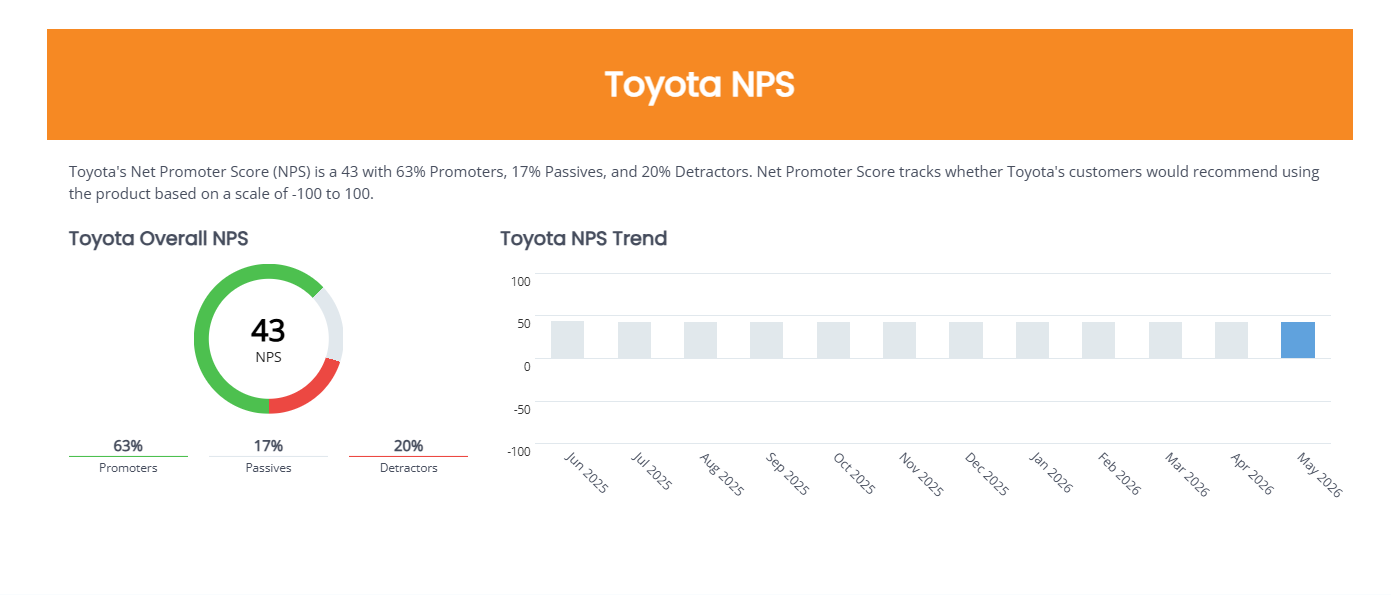 When the industry venerates these short-term emotional responses as a benchmark for long-term product planning, it creates a systemic misjudgment. True brand loyalty must withstand the tests of time, malfunctions, and the allure of competitors' new models, not merely exist in the first quarter after payment.
From "Score Competition" to "Value Anchoring": Reconstructing NPS Utility
The true value of NPS should not be as a magnifying glass for short-term sentiment, but as a diagnostic tool for the long-term health of the OEM-user relationship. This necessitates two fundamental shifts: First, the measurement period must be extended, focusing on VOM shifts at critical junctures like "one year of ownership" or "after the first major repair." Second, the question dimensions must be deepened, moving from the single-point declaration of "would you recommend" to structural attribution analysis of "why/why not" and "which specific experiences drive the recommendation."
For instance, a brand might score high initially due to a flashy smart screen, but a year later, laggy infotainment systems and expensive repair costs can rapidly erode that goodwill. If a manufacturer focuses only on the former and ignores the latter, it is mistaking the branch for the root.
Beyond NPS: Building a New KPI system or even a "Real-Time Reputation Ecosystem"
In the era of smart vehicles, manufacturers have the full capability to move beyond traditional NPS questionnaire surveys and consider a real-time, dynamic "reputation ecosystem." The fluency of human-machine interaction, the frequency and disengagement rates of assisted driving, satisfaction with charging networks, user activity and complaints within brand APPs – these constant streams of real behavioral data represent the most genuine expression of user sentiment.
Only by correlating NPS with these live data feeds can analysis penetrate beneath the surface of "what users say" to the deeper reality of "how users vote with their behavior."
For example, a consistent decline in the "daily active usage time of the infotainment system" might signal waning user enthusiasm earlier and more accurately than an NPS score six months down the line. Future competitiveness will hinge on the ability to translate this silent data into insights that precede user dissatisfaction.
Conclusion: The Long River of Reputation
Competition in the auto industry is a marathon measured in decades. A vehicle's reputation requires the complete test of seasons throughout its entire lifecycle. The cognitive trap many manufacturers face today is an obsession with the high-score illusion of the "new car honeymoon," using short-term emotional metrics to guide long-term strategy. True long-termism means establishing a measurement system capable of weathering cycles and listening to the true pulse of users.
When manufacturers learn to shift from "celebrating high scores" to "respecting low scores," and from "focusing on the moment of purchase" to "guarding the full-cycle experience," NPS can shed its shackles as a vanity metric and truly become a compass guiding sustainable growth. After all, time is the most impartial judge of reputation.